AI gets talked about like it’s either going to replace developers or turn every website into a generic template. That isn’t how we use it.
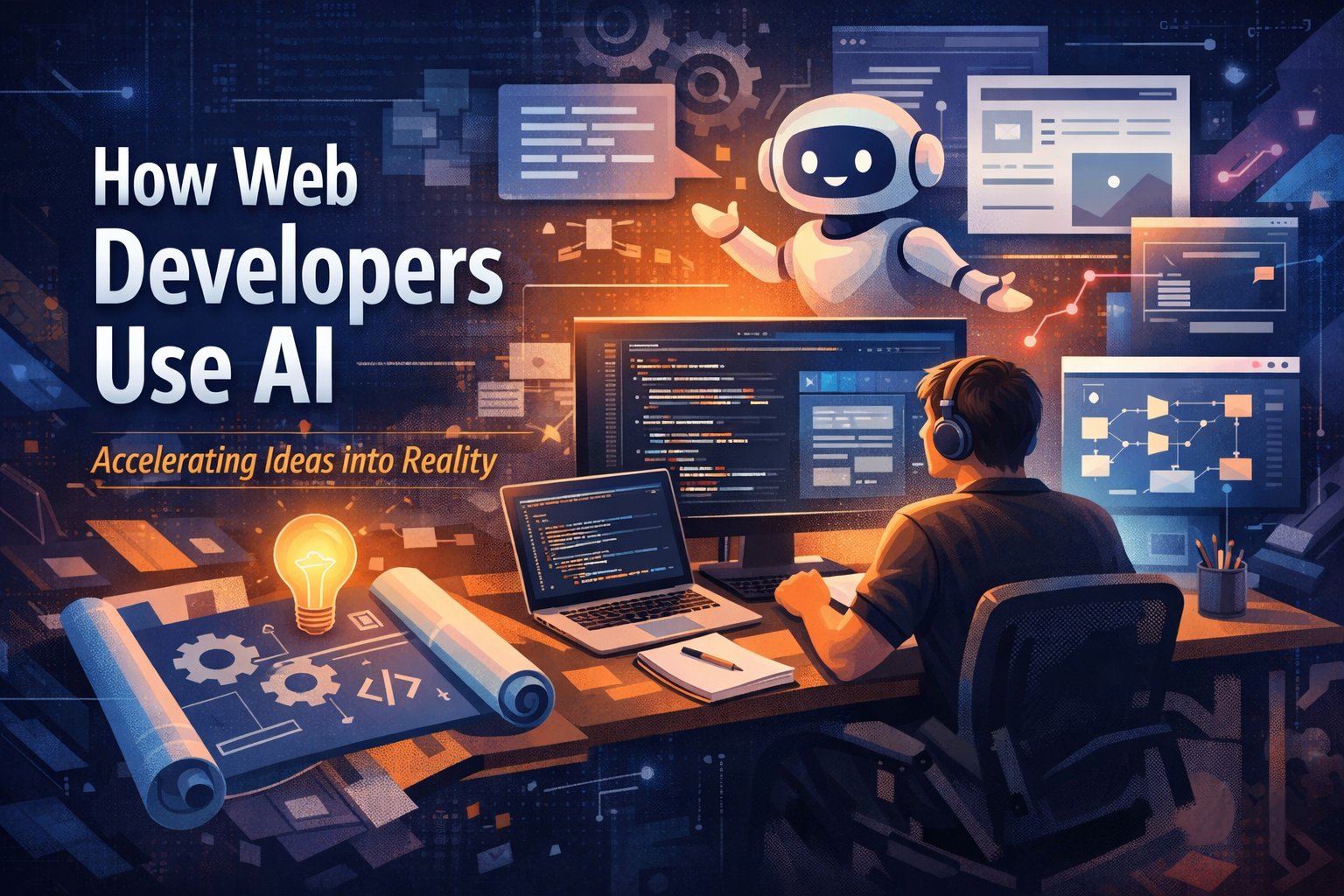
For us, AI is a production tool. It removes friction from the work we already do. It helps us move from idea to execution faster, reduces repetitive tasks, and frees up time for architecture, design, and problem-solving. It does not replace thinking. It accelerates it.
Replacing Placeholder Content With Real Copy
One of the most immediate changes to our workflow is that we no longer use Lorem ipsum.
Many projects start with strong businesses but little or no written content. That used to mean delays, empty layouts, or bringing in outside writers just to get usable text on the page. Now we generate real draft copy from day one. That lets us design around actual messaging instead of filler, which leads to better structure, better hierarchy, and better results.
We don’t treat AI output as finished content. It’s a starting point. We shape, refine, and align it with each client’s voice and goals.
Thinking Through Projects Before Writing Code
Before we write a single line of code, we often use AI to pressure-test ideas.
We walk through architecture, identify weak spots, explore alternatives, and validate logic. Once the direction is clear, we use it to generate a clean foundation — a starting framework that we then optimize, customize, and integrate into real systems.
That doesn’t replace expertise. It removes busywork. More time goes into structure, performance, accessibility, and long-term maintainability.
Working With Existing Code More Efficiently
AI has become a powerful tool for maintaining and modernizing projects.
We regularly use it to:
-
Document legacy code
-
Update deprecated functions
-
Refactor sections for clarity and performance
Instead of rewriting entire systems or hunting through documentation, we can analyze what’s already there, understand it quickly, and improve it without breaking the underlying architecture.
Debugging Without the Scavenger Hunt
This is where the time savings are most noticeable.
We used to spend hours chasing down obscure errors across forums, changelogs, and documentation. Now we can isolate the issue, analyze the output, and get clear explanations of what’s happening and why.
It doesn’t remove the need to understand the system. It removes the guesswork. Problems that once took half a day often take minutes.
Creative Production: Text, Visuals, and Video
Beyond development, we use AI across content and creative production.
It helps with drafting articles, generating imagery, creating diagrams, and testing early-stage video concepts. The pace of improvement has been dramatic. What was experimental a couple of years ago is now reliable enough to be part of real workflows.
That doesn’t mean everything is automated. It means creativity is no longer limited by tooling.
What AI Does — and What It Doesn’t
AI does not make architectural decisions. It does not understand long-term business strategy, brand nuance, or the real-world context behind a project. Those judgments come from experience.
What it does is reduce friction between ideas and execution. It turns planning into progress faster and allows us to spend more time on the work that actually matters.
We don’t use AI because it’s trendy. We use it because it makes us better at what we already do.
When used intentionally, AI isn’t a shortcut.
It’s a force multiplier.