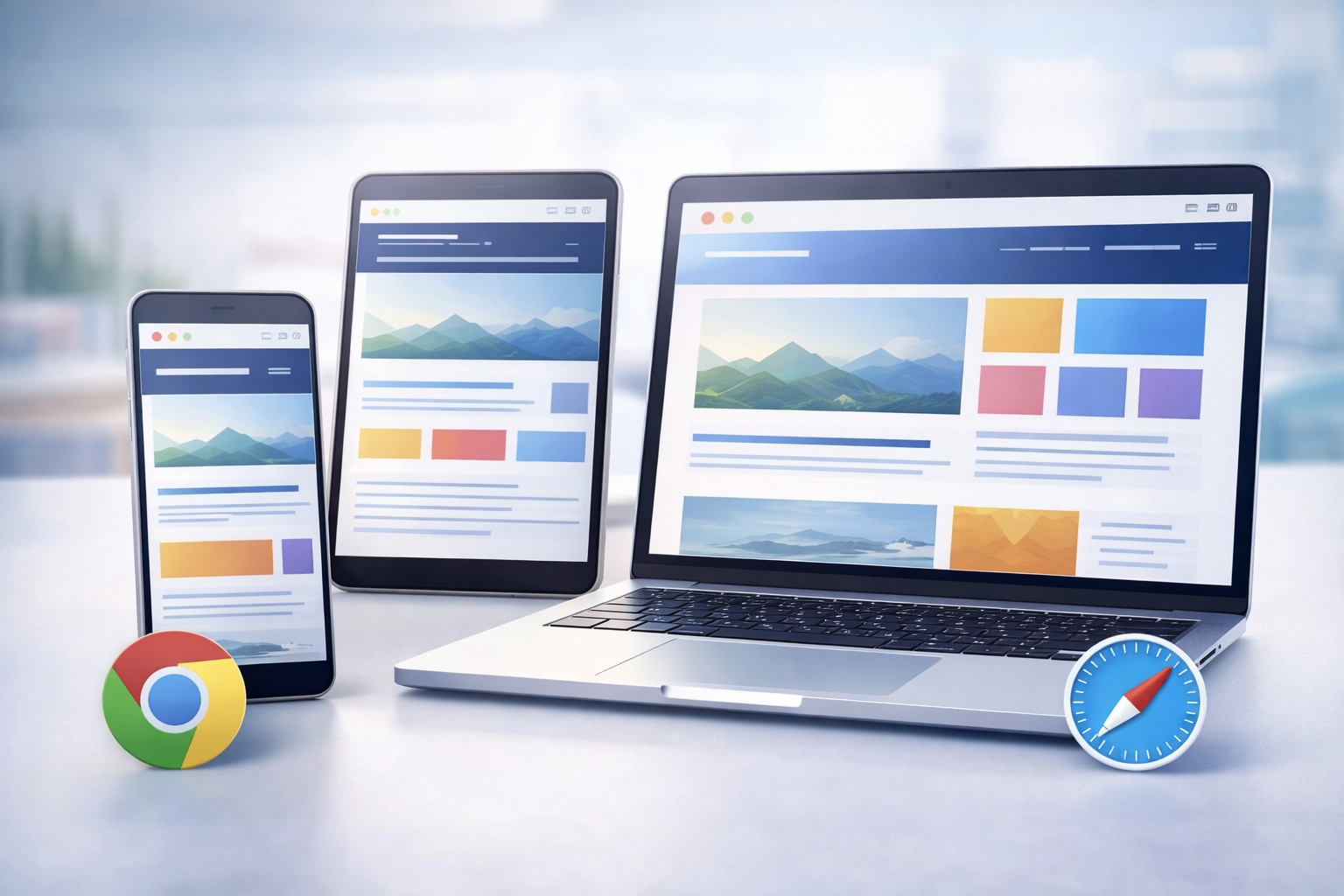
In today’s digital landscape, a website is no longer just a marketing asset—it is often the primary interface between a business and its audience. Whether someone is researching a service, making a purchase, or simply trying to understand what you offer, their experience is shaped almost entirely by how your site looks, functions, and adapts to their device.
Responsive modern web design is not about aesthetics alone. It is about credibility, accessibility, usability, and long-term performance. A well-designed website communicates trust, removes friction, and ensures that your message is clear regardless of how or where it is viewed.
This article explores why responsive, modern web design remains essential, and what truly matters when building or updating a website for long-term success.
Web Design as Brand and First Impression
For most visitors, your website is the first interaction they will have with your brand. In many cases, it is the only interaction before they decide whether to contact you, purchase from you, or move on.
A modern design signals that a business is current, professional, and invested in quality. An outdated or poorly structured site suggests the opposite—even if the underlying product or service is excellent.
Visual Consistency and Brand Identity
Effective web design reinforces brand identity through consistent visual language. Color palettes, typography, layout, and imagery should align with how a business wants to be perceived. When these elements are cohesive, visitors recognize the brand more easily and feel a stronger sense of trust and familiarity.
Consistency also reduces cognitive effort. When users understand the visual structure of a site quickly, they can focus on content rather than deciphering layout.
Functionality as a Trust Signal
Design is inseparable from usability. A website that loads quickly, behaves predictably, and presents information clearly communicates competence. Broken elements, confusing navigation, or cluttered layouts introduce doubt.
Credibility is built as much through how a site works as through how it looks.
User Experience, Navigation, and Clarity
Modern web design prioritizes how users move through a site, not just what they see on the screen.
Clear Structure and Intuitive Navigation
Visitors should never have to guess where information lives. Logical page hierarchy, readable headings, and well-organized menus make it easier for users to find what they need without friction.
Good navigation is invisible when it works well. Poor navigation becomes a barrier that increases bounce rates and reduces conversions.
Designing for Real Usage Patterns
People scan more than they read. Effective modern design uses spacing, typography, and visual hierarchy to guide attention toward what matters most. Calls to action, key messages, and supporting content are placed where users naturally look.
This is not about visual trends—it is about aligning structure with human behavior.
Responsive Design: One Experience Across All Devices
Responsive design ensures that a website adapts fluidly to different screen sizes, orientations, and input methods. This is no longer optional.
Mobile traffic consistently rivals or exceeds desktop in many industries, and users expect the same clarity and functionality regardless of device. A site that works only on large screens is functionally broken for a significant portion of its audience.
Responsive design is not simply “shrinking” a layout. It involves rethinking how content stacks, how navigation behaves, how touch interactions differ from mouse input, and how performance is maintained on slower connections.
A truly responsive site delivers the same information, usability, and brand experience everywhere—without compromise.
Accessibility as a Design Standard
Modern web design must account for accessibility from the start.
Accessibility means ensuring that people with visual, auditory, motor, or cognitive impairments can navigate and understand a website. This includes:
-
Semantic HTML structure for screen readers
-
Alternative text for images
-
Sufficient color contrast
-
Logical keyboard navigation
-
Clear labeling of interactive elements
Designing with accessibility in mind does not reduce creativity. It improves clarity for everyone and expands who can engage with your content. It is also increasingly aligned with legal and ethical standards for public-facing websites.
What “Modern Design” Really Means
Modern design is often mistaken for visual trends. In practice, it is about systems that remain effective as technology and user expectations evolve.
Simplicity and Focus
Clean layouts, intentional spacing, and restrained use of decorative elements allow content to take center stage. This does not mean minimalism for its own sake. It means removing anything that does not support clarity, usability, or purpose.
A well-designed site feels effortless to navigate because unnecessary complexity has been eliminated.
Performance and Technical Foundations
Design decisions directly impact performance. Image optimization, layout structure, and script management affect load times, stability, and responsiveness.
Modern web design is inseparable from technical quality. A visually appealing site that loads slowly or behaves inconsistently undermines user trust and search visibility.
Future-Ready Structure
Truly modern design avoids locking a site into rigid systems that are difficult to update. A flexible layout, clean content architecture, and scalable components allow a website to evolve without needing a complete rebuild every few years.
This is what makes design sustainable rather than disposable.
Why Responsive Modern Design Matters Long-Term
A responsive, modern website is not just a marketing tool—it is operational infrastructure.
It supports:
-
Brand credibility and recognition
-
User trust and engagement
-
Search visibility and technical health
-
Accessibility and inclusivity
-
Ongoing growth without constant rework
Businesses that treat web design as a living system rather than a one-time project gain compounding value over time. The site becomes easier to maintain, easier to expand, and more aligned with changing user behavior.
Final Thoughts
Responsive modern web design is not about following trends or refreshing visuals for appearance alone. It is about building a website that communicates clearly, adapts intelligently, and remains usable across devices, audiences, and years.
A well-designed site does more than look good. It works quietly in the background, reinforcing trust, reducing friction, and supporting the goals of the business it represents.
That is the real value of modern web design—design that continues to perform long after it is launched.