There is a lot of confusion around domain names and web hosting. On the surface, they seem like the same thing. When someone asks for your website, the answer is usually something like:
“It’s www.yourwebsite.com.”
So it’s easy to assume that the address is the website.
It isn’t.
To put it simply:
your domain name is the address, and your website lives on a hosting server.
A helpful way to think about it is this:
-
Your domain name is like your street address
-
Your web hosting is the actual house
The address tells people where to go. The house is where everything exists.
Let’s break that down.
What Is Web Hosting?
Everything on the internet is hosted on a server.

A web server is simply a computer with a specialized job: storing files and delivering them to visitors through a browser. When someone visits your website, their device connects to that server and downloads the files needed to display the page.
Those files include:
-
Images and media
-
Written content
-
Code (HTML, CSS, JavaScript, PHP, etc.)
-
Databases and application logic
All of this lives inside your web hosting environment.
This is why hosting is typically billed monthly or annually. Running a secure, fast, reliable server with backups, monitoring, and minimal downtime requires infrastructure and ongoing management. While low-cost hosting exists, higher-quality hosting generally offers better performance, stronger security, and fewer long-term issues.
In short:
web hosting is where your website actually lives.
What Is a Domain Name?
Every server on the internet has a numerical address called an IP address, something like:
192.0.2.1
Computers use these numbers to locate each other, but they are difficult for humans to remember.
This is where domain names come in.
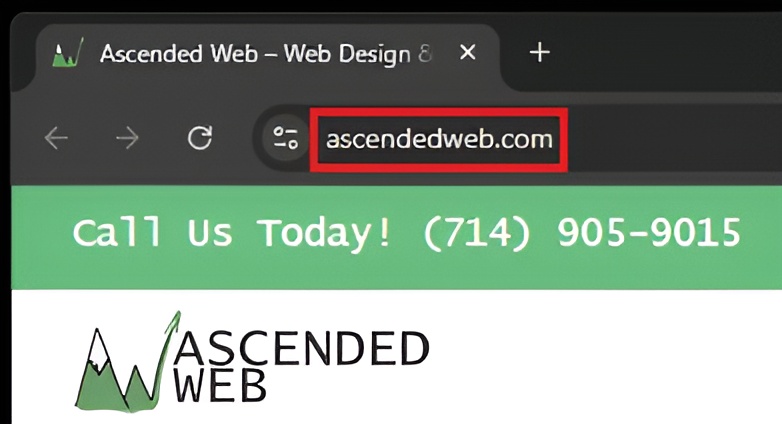
A domain name is a human-readable label that points to a server’s IP address. Instead of typing a long string of numbers, you type something like:
yourbusiness.com
Behind the scenes, a system called DNS (Domain Name System) translates that domain name into the correct IP address and routes your browser to the proper server.
So:
-
The domain name is the readable address
-
DNS translates that name into a numerical destination
-
The server at that destination delivers your website
Because domain names must be registered globally, they are purchased through a domain registrar and renewed annually. Most domains are inexpensive, though short, premium, or highly desirable names can be significantly more expensive.
Do You Need Web Hosting to Own a Domain?
No.
You can register and own a domain name even if you do not yet have a website.
This is often a smart move if you:
-
Have a business name or brand you plan to use later
-
Want to secure your domain before someone else does
-
Only need the domain for professional email
-
Want to point it temporarily to another service (such as social media or a landing page)
Owning the domain gives you control over where it points, even without a live website.
Do You Need a Domain Name to Build a Website?
Also no.
You can build a website on a hosting server without attaching a domain name. This is common during development when branding or content is still being finalized.
When the site is ready to launch, the domain is simply pointed to the hosting environment. From that point forward, visitors reach the site through the domain rather than a temporary development address.
So technically, you can:
-
Own a domain without a website
-
Build a website without a domain
Most live websites use both, but they remain separate components.
How Domains and Web Hosting Work Together
In practice, the relationship looks like this:
-
You register a domain name through a domain provider
-
You purchase web hosting from a hosting company
-
You configure DNS so the domain points to the hosting server
-
Visitors enter your domain into their browser
-
DNS routes them to the server where your website files are stored
They work together, but they are not the same service.
Some companies offer both domains and hosting in one place. While convenient, this is not required. In many cases, separating them provides more flexibility, better performance options, and easier long-term management.
Our Approach to Web Hosting
For hosting, we currently use and recommend SiteGround.
SiteGround offers a strong balance of performance, security, and support for WordPress websites and custom builds alike. Their infrastructure, automated backups, caching, and monitoring tools help ensure long-term stability, which is far more important than saving a few dollars on low-quality hosting.
We have also worked extensively with platforms such as WP Engine in the past and continue to prioritize hosting environments that are optimized for speed, security, and maintainability rather than price alone.
Our Approach to Domain Management
For domain registration and DNS management, we use Cloudflare.
Cloudflare provides a clean interface, fast global DNS, and integrated security features that align well with modern web infrastructure. Managing domains at the DNS level also allows for advanced control over routing, performance, and protection without unnecessary complexity.
One principle always applies:
you should retain full ownership and access to your domain, regardless of who builds or hosts your site.
Why This Confusion Exists
Domains and hosting are often bundled together by large providers, which makes it easy to assume they are the same thing.
They are not.
You can register a domain in one place and host your website in another. You can change hosting providers without changing your domain. You can point your domain to different services over time as your business evolves.
Understanding this separation gives you flexibility and prevents vendor lock-in.
The Simple Version
If you remember nothing else, remember this:
Your domain name is your address.
Your web hosting is where your website lives.
They work together, but they are not the same thing.
Once you understand that distinction, managing your website, changing hosts, launching new projects, or scaling over time becomes significantly easier.